
 Français
 Latine
 日本語
日本語 한국어
한국어 Tiếng Việt
 বাংলা
বাংলা ไทย
ไทย Hrvatski
 čeština
 dansk
dansk Nederlands
 Pilipino
 Suomalainen
 Deutsch
 Magyar
 Indonesia
 italiano
 Gaeilge
 Bahasa Melayu
 norsk
norsk فارسی
فارسی Polskie
 Português
 Română
 Slovák
 svenska
 Türk
Türk
Aluminum coil processing rarely fails in a dramatic way. It fails by drift: the top coat creeps two microns over target, the oven loses four degrees between coils, the accumulator runs short whenever the line passes 45 metres per minute, and six weeks later a facade panel delaminates on site. The process itself is one continuous chain - uncoiling, splicing, pretreatment, coating, curing, lamination, cooling and rewinding - and every link in it is measured in seconds and microns. The practical point up front: a coil line is only as dependable as its slowest stage, its cure window and its coil changeover routine. Everything else, from chrome-free pretreatment to roller levelling, exists to hold those three things inside tolerance.
From Uncoiler to Rewinder: What Aluminum Coil Processing Covers
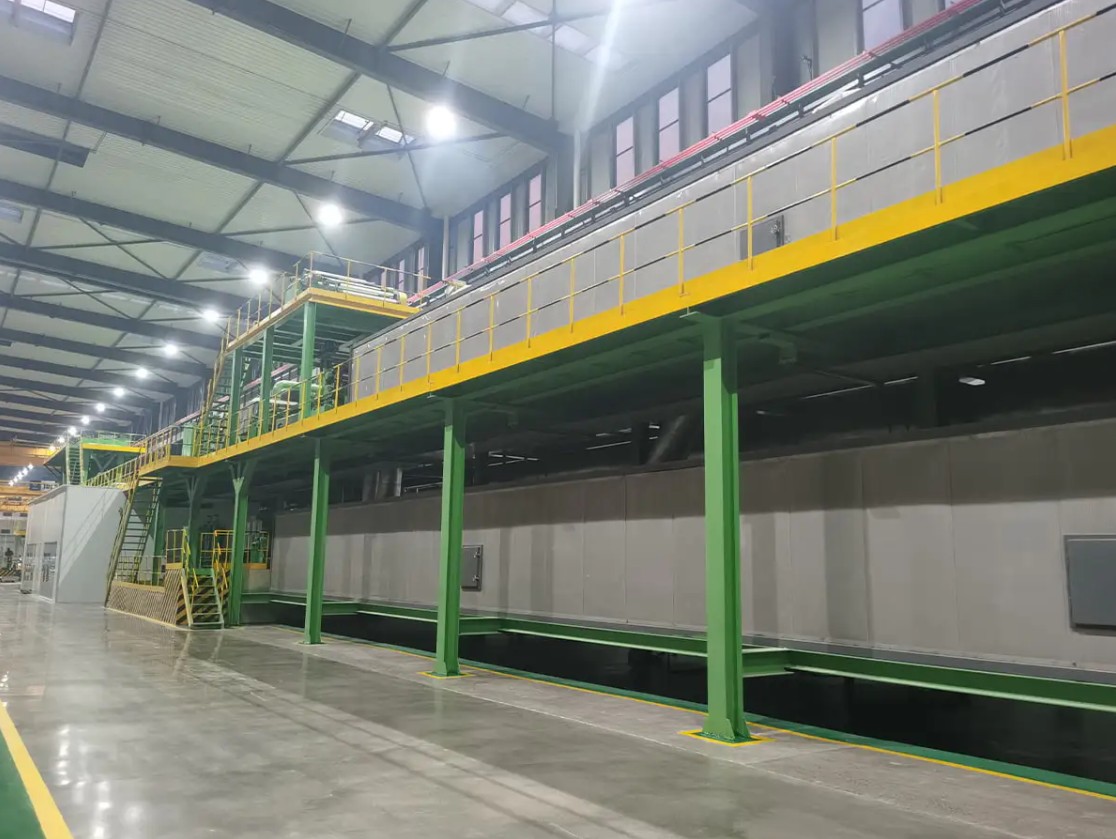
A coating line moves strip in one direction. The uncoiler pays off the coil, a shear cuts the tail, and a splicer stitches the new coil to the old one while an accumulator stores enough strip for the line to keep running during that standstill. The strip then enters pretreatment: alkaline cleaning, staged rinsing, and a conversion coating applied at controlled temperature, followed by a dry-off oven that has to remove every trace of moisture before the primer roller touches the surface.
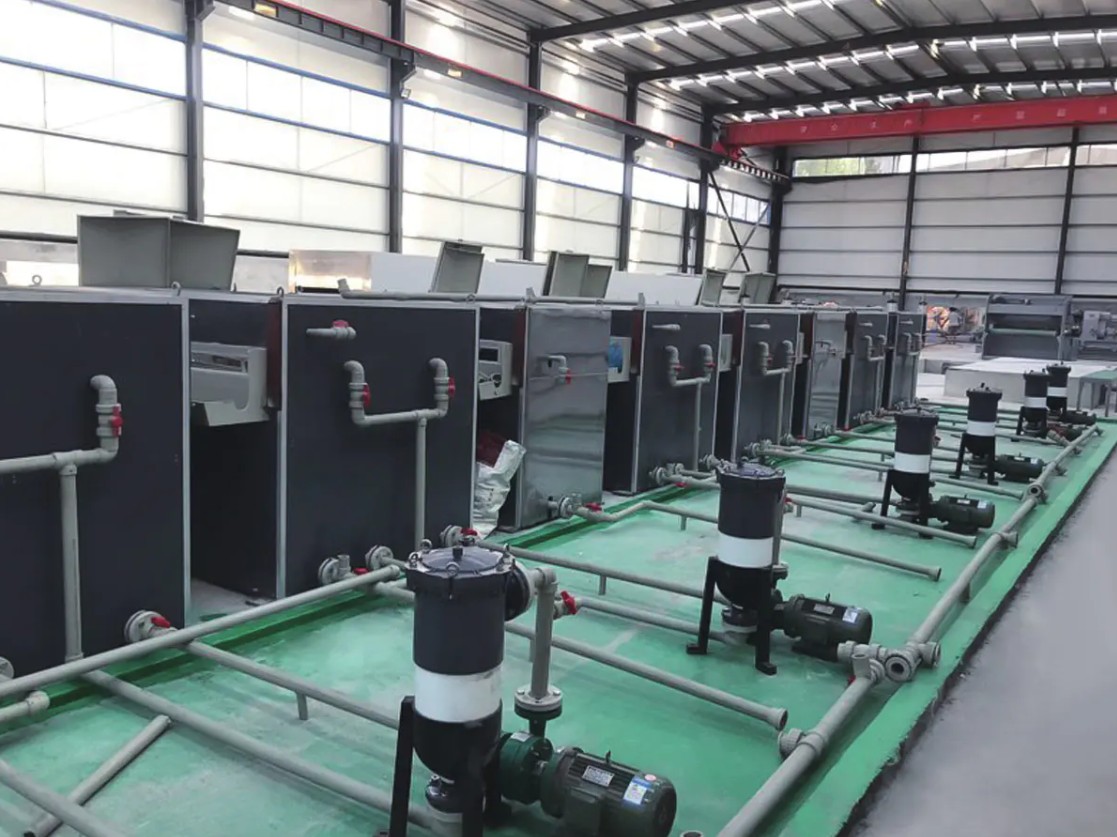
That first stage deserves respect because it is unrecoverable. One micron of residual rolling oil, or a poorly rinsed alkaline film, will weaken adhesion long before the finish coat is applied, and no amount of curing will bring it back. Builders who get this right treat pretreatment as a machine in its own right, with its own drives, chemical dosing and checkpoints, rather than an accessory bolted onto the entry of the coater.
 Pretreatment Cleaning LineThe cleanliness of metal surfaces and the quality of chemical conversion coatings directly determine the corrosion resistance, paint adhesion, and final product qualit...View Product →
After coating and curing, the strip may be laminated with a protective or decorative film, embossed for texture, cooled and rewound under controlled tension. Tension control matters more than most buyers expect: a coil wound too tight prints marks that only appear after bending, and one wound too loose telescopes in transit.
Line Speed Sets Real Capacity, Not the Motor Rating
Every stage on a coil line has its own speed ceiling, and the slowest one decides what you actually ship. The chart below compares the practical maximum of six stages on a mid-range aluminium coil coating line.
These numbers are not marketing figures; they are the speeds at which each stage still produces a saleable surface. The top coat station caps the line at 42 metres per minute, because film build and solvent flash-off both need time, and pushing past that point produces orange-peel texture and drying-edge defects. The primer at 48 metres per minute and the laminator at 36 metres per minute only matter when both run at once, which is exactly the case on a combined coating and lamination line. A machine quoted at 60 metres per minute is therefore a 36 metres per minute line if your product needs film lamination, and closer to 25 metres per minute once sheet levelling is included. That is why any capacity figure should carry the product recipe with it: the same hardware delivers three different outputs. Buyers who compare two quotations on a single speed number are not comparing the same thing.
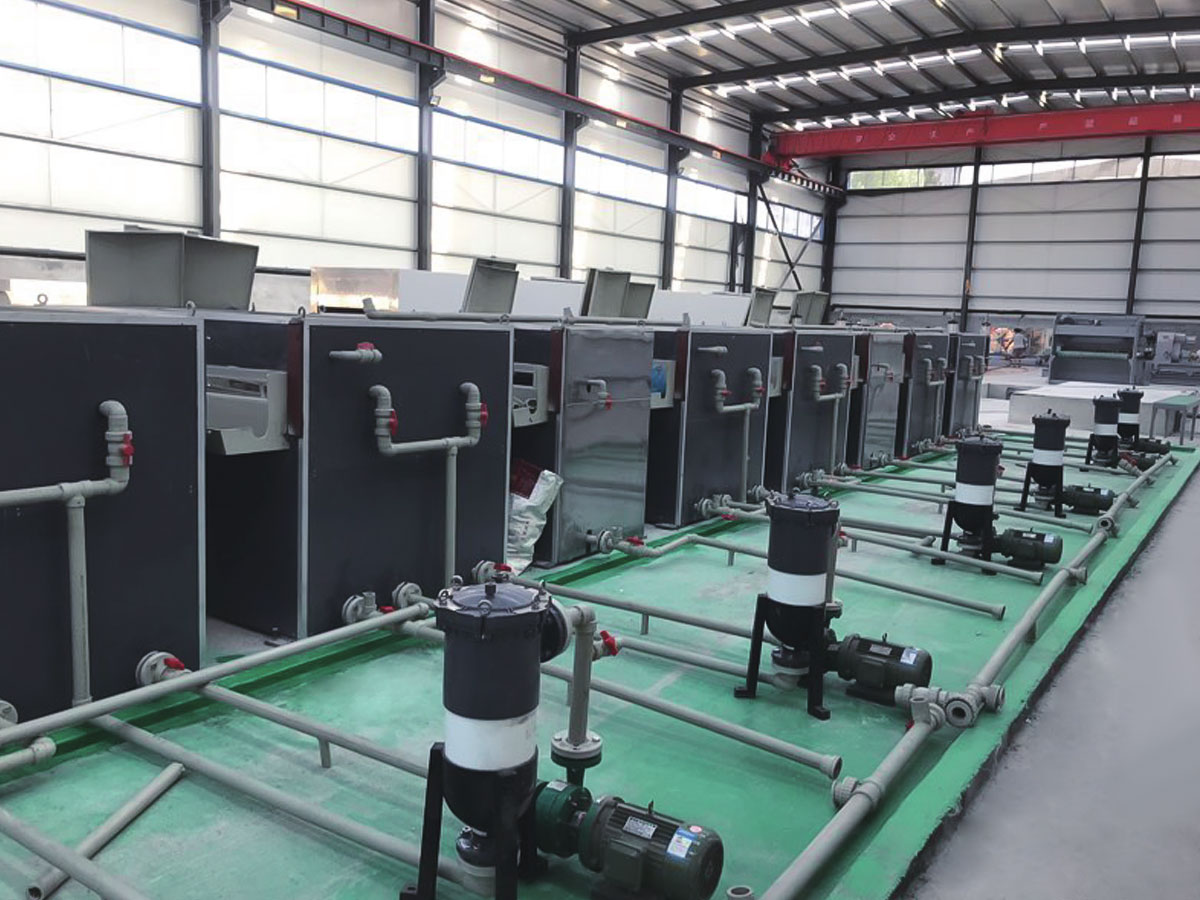
 Aluminum/Steel Coil Coating and Printing LineEquipment AccessoriesView Product →
For a closer look at how these trade-offs translate into commercial results, read about the production advantages a metal coil coating line can bring.
The Cure Window: Where Most Adhesion Problems Start
Cure is a time and temperature relationship measured on the strip, not in the air. The profile below shows what happens across a five-zone oven followed by a cooling section.
The curve climbs steeply through the first two zones, flattens between zones three and five at roughly 226 to 232 degrees Celsius, then falls away in the cooling section. That plateau is not a suggestion. Polyester and PVDF coatings need the metal itself, not the oven air, to reach the specified peak metal temperature, and most specifications sit between 224 and 232 degrees Celsius with a dwell of 20 to 40 seconds. Reading air temperature instead of strip temperature is the most common commissioning mistake, because strip running at 42 metres per minute absorbs heat differently from strip running at 28. Under-cure leaves the film soft and adhesion marginal, while over-cure makes it brittle, so the coating cracks at a tight bend even though pencil hardness looks excellent. Record this profile for every coil, not once at commissioning.
What Actually Goes Wrong: Defect Patterns on Coil Lines
Quality claims on coated coil follow a fairly stable pattern, and the pattern tells you where to spend your instrumentation budget.
Adhesion loss and film build deviation together account for half of the claims shown here, and both trace back to the same two variables: pretreatment quality and cure control. Colour and gloss mismatch usually appears after a coil change, when a new alloy lot, a different primer batch or a cooler strip shifts the shade by a few units. Flatness complaints surface later still, often after levelling or after panels have been cut and laminated, which makes them the most expensive category to correct. Edge and splice damage is the smallest slice but the quickest to fix, because it is a mechanical setting rather than a chemistry problem. Four of the six categories can be defended with instrumentation - strip temperature, film weight, colour measurement and tension logging - instead of operator judgement. That is the argument for buying measurement as part of the line rather than as an afterthought.
Matching the Line to the Product: Standard Coating versus A2 Fire-Rated Coil
Two coil lines of similar price can be built for completely different products. The comparison below scores six dimensions that buyers usually weigh against each other.
The radar compares a standard PE or PVDF coil coating line with a line configured for A2 fire-rated coil composite production, scored from 0 to 10 on six dimensions. The standard line wins on line speed, film build flexibility and energy efficiency, because it runs simpler chemistry and changes recipes more quickly. The A2 configuration wins on fire performance and changeover flexibility, since it typically combines a fire-rated core with the aluminium skin in a single pass. Neither shape is better in absolute terms; they simply describe different products and different markets. What matters at quotation stage is that the six axes are scored against your own product mix rather than a generic benchmark, because a line optimised for exterior cladding is a poor match for a plant that changes colour every shift. If fire-rated panels are on your roadmap, test the adhesion axis hardest at low film weights, where mineral-filled systems behave differently from plain polyester.
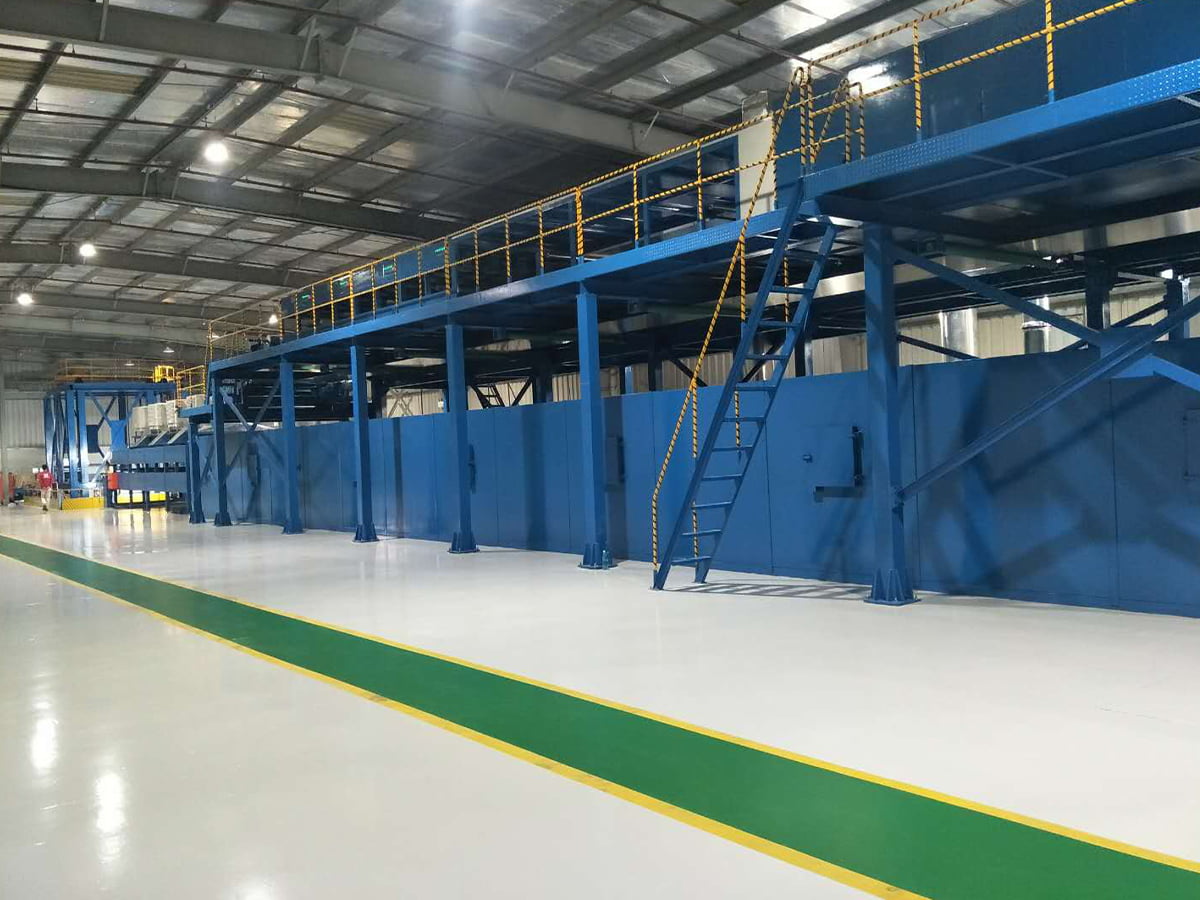
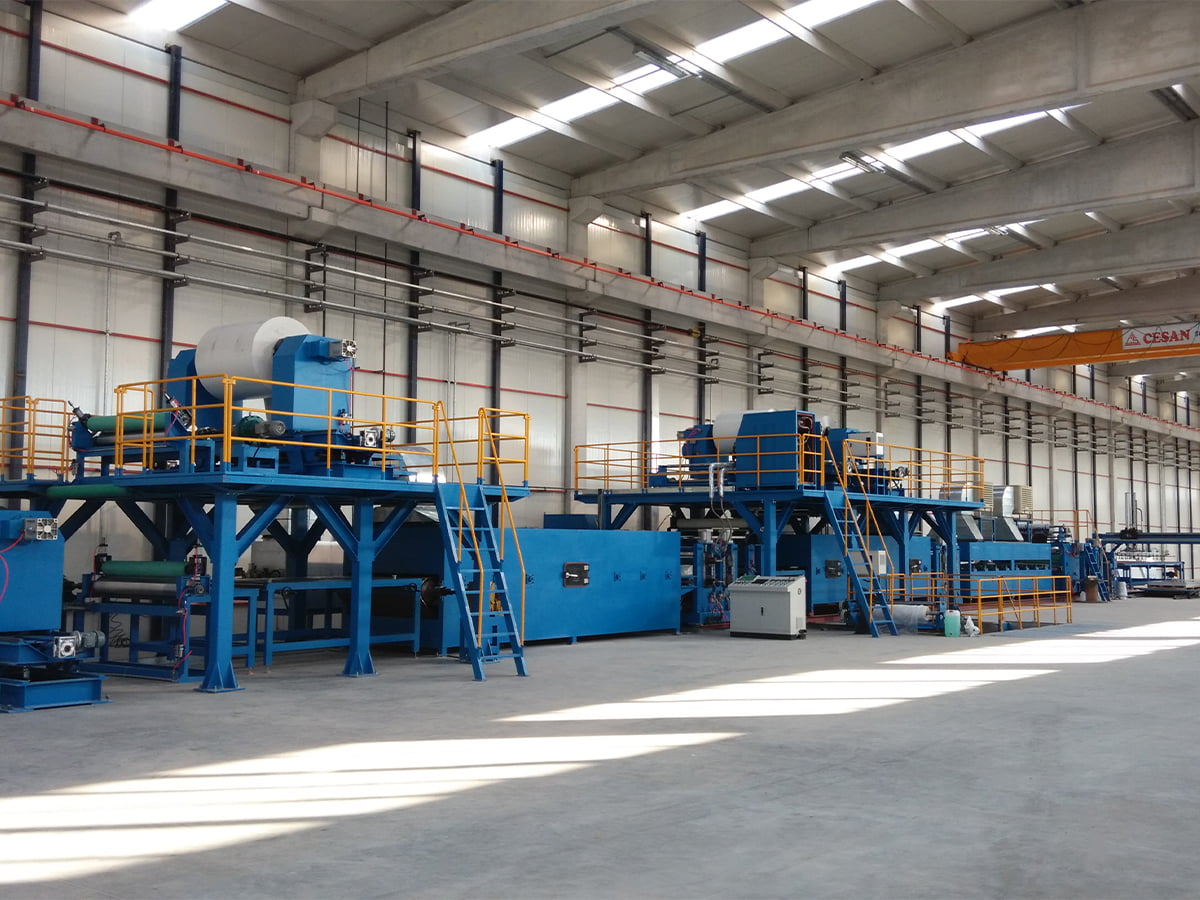 A2 Coil Production Line/A2 ACP Composite LineEquipment AccessoriesView Product →
Tolerances Worth Locking Into the Contract
A quotation that lists only speed and coil width leaves the expensive variables open. The table below shows the parameters worth writing in as verified acceptance criteria, together with the method used to check each one.
| Parameter | Practical band | Why it matters | How to verify |
|---|---|---|---|
| Coating film build | Target plus or minus 2 microns | Sets gloss, colour and warranty life | Strip weight test or XRF |
| Peak metal temperature | 224 to 232 degrees Celsius | Under-cure weakens adhesion, over-cure embrittles the film | Thermolabel strip on every coil |
| Line speed stability | Within 3 percent of set speed | Speed swings shift film build and dwell time | Drive trend log over 8 hours |
| Strip flatness after levelling | 0 to 3 I-units | Waviness appears only after bending and lamination | Straight edge on a flat plate |
| Splicer cycle time | 45 to 90 seconds at full speed | Determines scrap length and accumulator volume | Timed run during acceptance |
Anything not listed here is still negotiable, but it is far easier to negotiate before the first coil is threaded.
A Short Pre-Order Checklist
Use the list below as a filter before shortlisting any supplier, whether the scope is a coating line, a composite line or a single associated machine.
- Send real coil samples, including the alloy and temper you intend to run, not just mill certificates.
- Ask for a recorded strip temperature profile at three line speeds, not one.
- Confirm the recipe changeover time between your two most common products.
- Agree on the acceptance method for film build, adhesion and colour before shipment.
- Check which spare parts are held locally and how remote support is delivered.
- Confirm whether one supplier can also provide A2 core, coated aluminium coil and bonding film, because a single source shortens the commissioning loop.
The best moment to ask these questions is before the purchase order, when engineers still have leverage and options. If you want a second opinion on a specific product - coated coil, fire-rated composite coil, flooring or leather lines - the fastest route is to send your target specification to our process engineers and let them respond with a process route rather than a catalogue page.